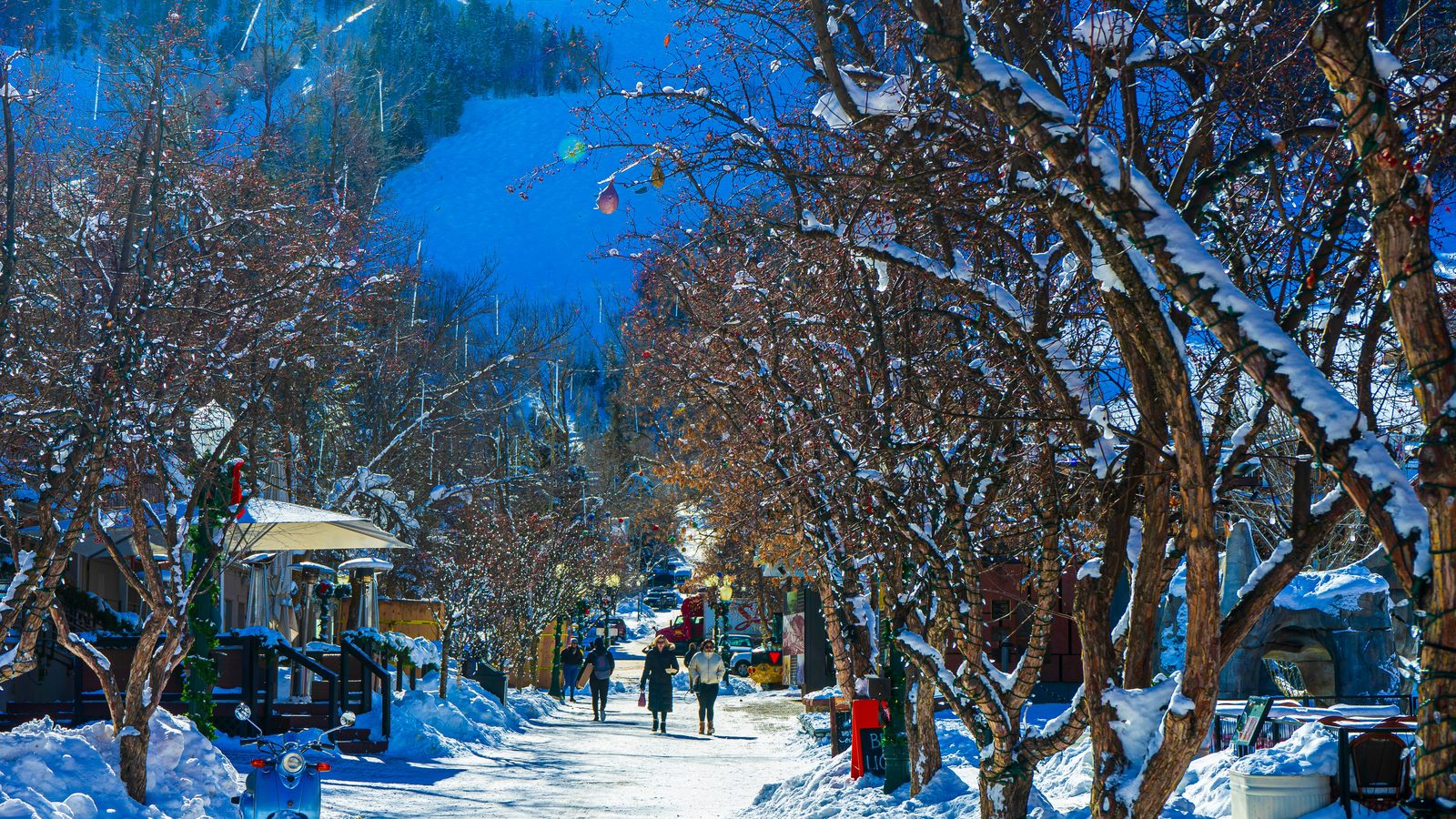
What a custom website actually costs in Aspen in 2026 — for restaurants, hotels, real estate brokers, and the brands that quietly run this town. Transparent numbers. No marketing fog.
If you have asked three agencies in Aspen what a website costs, you have probably received three completely different answers — and at least one of them ended with the words "let's hop on a call." This is not how pricing should work. So here is a transparent, studio-side breakdown: what you actually pay for a custom website in Aspen and the Roaring Fork Valley, and what you actually get for the money.
The Aspen market is unusual. The town runs on hospitality and real estate, the clientele is sophisticated, and a website that looks like a template costs the brand more in lost trust than it ever saves in build cost. The numbers below reflect what serious studios charge in 2026 — and where the lines actually fall.
The four real price tiers
Custom websites in Aspen fall into four bands. Anything below the bottom band is a template. Anything above the top is custom development with multiple specialists involved. Here is what each tier covers.
Why prices vary so much
Two websites at the same price band can look completely different — because the cost is not just the design hours. It is also the studio's positioning, the platform, and what is included after launch.
The main variables that move the price:
Custom design vs. template. A WordPress template restyled by a small shop runs $500–$1,500. A genuinely custom design — typography, palette, layout, illustration, photography direction — starts at $1,500 and climbs from there. The Aspen market reads templates instantly, and they undercut the brand they are meant to support.
Content and copywriting. If the studio writes the copy too, expect to add $500–$2,500 depending on length. Restaurants and hotels often need this — the in-house team can run a kitchen or a front desk, but rarely has time to write 7 pages of editorial copy.
Photography. Stock photos are free. A photographer for a half-day in Aspen runs $800–$2,000. Hotels and high-end real estate need original photography or the website looks generic. Restaurants can sometimes get by with the chef's iPhone — but only if the chef knows what they are doing.
Hosting and maintenance. Modern hosting on Netlify or Vercel is $0–$25 a month. The studio either bundles this in or invoices it separately. Avoid agencies that quote $200/month hosting on basic sites — that is markup.
SEO and analytics. A foundational SEO setup (meta tags, schema, sitemap, Google Search Console) should be included in any custom build. Ongoing SEO work — monthly content, backlink building, technical audits — is a separate retainer, typically $400–$2,000 a month.
What an Aspen restaurant website should actually include
The most common project in this market is a restaurant website. Here is what should be in every restaurant site in 2026, regardless of the price tier:
A real menu — ideally as embedded HTML, not a PDF download. Google indexes HTML menus. PDFs are search-invisible and slow on mobile.
Reservation integration. OpenTable, Resy, or Tock — whatever you use, link straight from the home page. Do not make a guest hunt for it.
Real photography. The dining room, the chef, two or three signature plates, the bar. Not stock food. Not the same image of a wood-fired oven that every restaurant in the Roaring Fork Valley uses.
Contact, address, hours, and a phone number — all clickable on mobile. This is local SEO 101 and most restaurant sites still get it wrong.
A press or accolades section if you have them. Aspen guests respond to Michelin mentions, James Beard nominations, and editorial features. Put them where they can be seen.
What a real estate website should actually include
Real estate is the other dominant market in Aspen, and the bar is higher because the listings themselves are higher. A $30M listing on a template site is a story your competitors will tell about you.
For luxury real estate in the Roaring Fork Valley, a website should treat each property as an editorial feature: hero video or photo, neighborhood story, room-by-room walkthrough, floor plan, agent or broker bio, and a clear inquiry path. The listings need to feel like the brochures used to feel — except always up-to-date, always shareable, and always indexed by Google.
Below that, the broker's brand site needs a strong about page, market reports, neighborhood pages (Aspen Core, Red Mountain, Snowmass, Old Snowmass, Brush Creek, Woody Creek, Basalt), and a contact path. Each neighborhood page is a separate SEO opportunity — most brokers ignore this, leaving easy ranking opportunities on the table.
What changes in 2026
Two things have shifted in the past 12 months. First, AI search — Google's AI Overviews, ChatGPT's web browsing, Perplexity — now answer most "best of" queries with citations to a handful of sources. Getting cited there matters more than ranking #4 on a traditional results page. This rewards sites with proper structured data and editorial content, and punishes thin template sites.
Second, image quality on phones. Every guest in Aspen is going to look at your site on a 6-inch screen first. The hero image needs to be sharp, fast, and color-accurate on that screen — or the booking goes to the next result.
The honest verdict
For a restaurant or small hotel in the Roaring Fork Valley, plan to spend somewhere between $600 and $2,500 on a custom website that actually represents the brand. For a serious editorial site or a real estate brokerage with full listings, plan $2,500 to $8,000. Anything less and you are buying a template; anything more should come with photography, copywriting, and ongoing marketing baked in.
The right number is the smallest one that makes the website feel like the place. In Aspen, that floor is higher than most other markets — but it is not as high as the agencies want you to believe.
If you want a no-call, transparent quote for a custom website in Aspen, the studio's pricing page shows the exact tiers and what is included in each — published, fixed, and honest.